


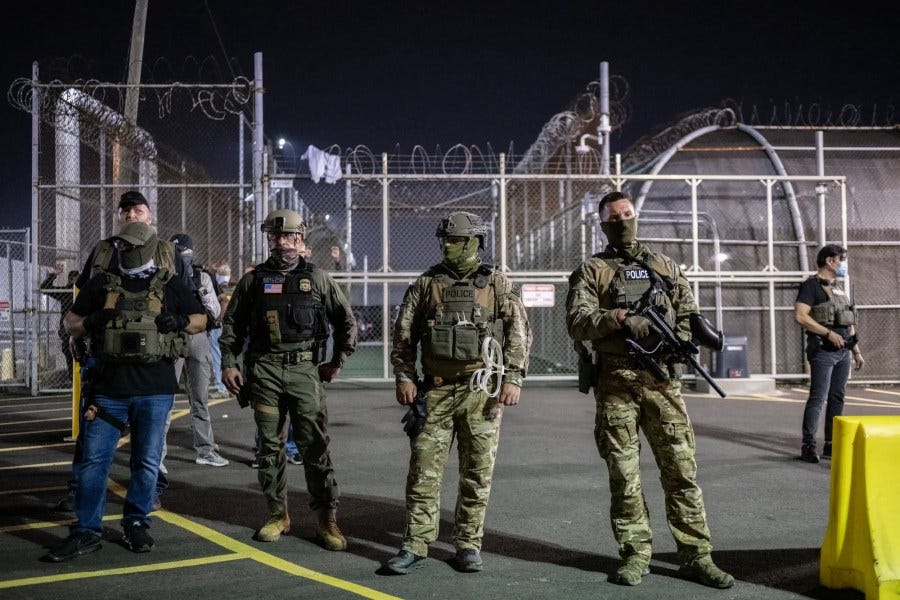
These aren’t activists or detainees making the claims. They’re ICE’s own employees. They say a Florida facility built for about 50 people crammed in as many as 342, that detainees slept in chains in an unventilated garage, and that elderly people with cancer were shackled 16 hours a day. Before officers complained, it was 24 hours a day, for weeks.
Whistleblowers inside U.S. Immigration and Customs Enforcement allege that detainees at ICE holding facilities in Miramar and Orlando, Florida, are living in overcrowded cells, using bathrooms overflowing with waste, and sleeping chained on the floor, according to allegations and photos released by House Oversight Committee Democrats.
Who’s Blowing the Whistle
The confidential whistleblowers are ICE employees with firsthand knowledge of the conditions, according to a September 21 letter from Oversight Democrats to acting ICE Director David Venturella. The letter accuses the agency of acting “in clear defiance of court orders and ICE’s own internal policies,” and warns conditions put staff, detainees, and the public at “imminent risk of serious harm or death.”
According to the letter, ICE is holding men, women, families, and elderly people with chronic medical conditions for days to weeks in conditions that include overcrowded cells, prolonged shackling, inadequate medical care and hygiene, insufficient food, and little to no access to lawyers.
The whistleblowers say Miramar’s management allowed detainees to be unshackled only during sleep, leaving them shackled 16 hours a day. And that was the improvement. For months before, people were shackled 24 hours a day, for weeks at a time, until multiple officers repeatedly complained.
Those chained included elderly people with colon and prostate cancer, vascular disorders, serious health problems, and limited mobility. ICE’s own Hold Room Directive prohibits holding elderly people in these facilities at all.
Sleeping in Chains in a Garage
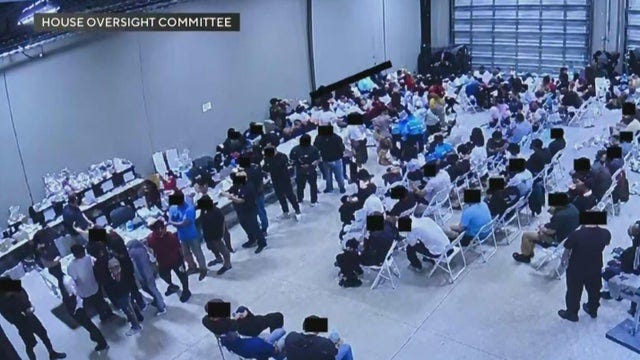
Whistleblower photos show detainees confined in the building’s sally port, an unventilated garage entrance, where they’re allegedly forced to sleep shackled for eight to 10 hours a day. Other images show people sleeping on concrete floors and rows of cots, people restrained with handcuffs, leg irons, and belly chains while asleep, and detainees brushing their teeth outside with a hose.
The bathrooms tell the rest of the story. Photos show overflowing portable toilets, and the report describes toilets clogged and leaking into holding areas, with detainees lacking clean clothes, soap, and basic hygiene products.
342 People in a Space Built for About 50
The Miramar facility is rated to hold no more than about 50 people. In August, it held 342 at once, nearly seven times capacity.
ICE holding facilities are prohibited from detaining people for more than 12 hours without special circumstances. Miramar is holding people an average of 48 hours, according to the whistleblowers. Management blamed a shortage of beds at long-term detention centers and arrest “quotas” imposed by ICE’s Miami Field Office. In other words, the administration’s push to arrest more people is directly driving the overcrowding.

Orlando: Black Mold, Doctored Records
The Orlando facility is allegedly no better. Whistleblowers describe standing-room-only cells where detainees are shackled 16 hours a day, people kept indoors without fresh air for two weeks, and black mold in the air vents.
Worse, the Orlando office is allegedly delaying, backdating, and deleting booking records to hide cases where people were held longer than allowed or detained in violation of court orders. That’s not just neglect. That’s an alleged cover-up.
Lawmakers Demand Answers
Oversight Democrats have opened an investigation into both facilities. Rep. Maxwell Frost of Orlando called Trump’s detention system “as cruel as it is unnecessary,” saying the administration’s “deliberate efforts to hide the conditions” inside are “abhorrent.” Rep. Debbie Wasserman Schultz made a surprise visit to Miramar in July and said she saw conditions she wouldn’t wish on her worst enemies.
It fits a broader pattern in Florida. A DHS inspector general report this month found Miami’s Krome Detention Center operating well above capacity, with people held in intake cells past the 12-hour limit.
ICE’s own employees are telling Congress that elderly cancer patients were chained for 16 hours a day, and for months around the clock, while detainees slept in shackles in a garage and used toilets overflowing onto the floor. The overcrowding is being driven by arrest quotas, and one office is allegedly doctoring records to hide it. This is the Trump administration’s mass deportation machine, described by the people running it.