


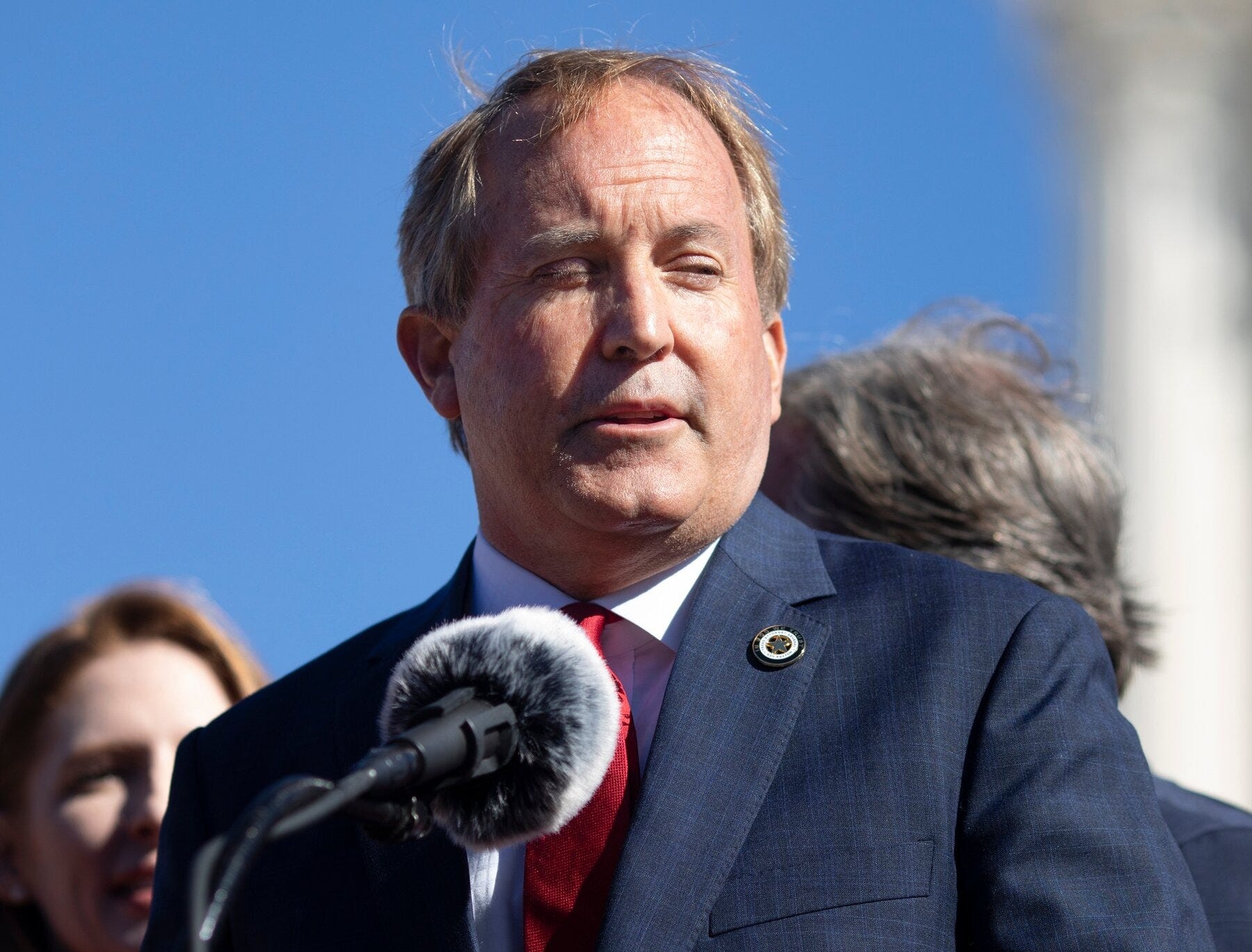
Ken Paxton’s own office warned Texans this year that “it is illegal to misrepresent your residence on election records.” Now Texas Democrats say Paxton did exactly that, voting six times over two years from a house he moved out of during his divorce, using it to help secure his own Senate nomination in the process.
Dallas-area Democrats are demanding an investigation into Republican Texas Attorney General Ken Paxton for illegal voting, after ProPublica and The Texas Tribune revealed he has repeatedly voted while registered at an address where he no longer appears to live.
What the Complaint Alleges
The Collin County Democratic Party filed a formal complaint on July 14 asking the Texas secretary of state to investigate whether Paxton committed election fraud by voting in the May primary runoff, the same election in which he defeated longtime incumbent John Cornyn to secure the Republican Party’s nomination for U.S. Senate.
Mary Higbe, vice chair of the Collin County Democratic Party, pointed directly to Paxton’s own office’s messaging in the complaint, noting that as recently as February, Paxton’s office had warned voters that “it is illegal to misrepresent your residence on election records.” “For someone who’s made a stand against voter fraud, it’s unconscionable (yet not surprising) that Paxton engages in this behavior,” Higbe wrote, adding, “I ask that he be held to the same standards he wishes to hold others to.”
The Reporting Behind the Complaint
The complaint stems directly from a ProPublica and Texas Tribune investigation, which found that Paxton has voted six times in the past two years while registered at an address in Collin County where he previously lived with his wife, state Sen. Angela Paxton.
According to a divorce filing from his wife and a source close to the Paxton family, Paxton moved out of that Collin County home in June 2024 and hasn’t returned. Where exactly he’s been living since is unclear, but reporting has linked him to a home in neighboring Denton County since February, a different county entirely from the one where he’s continued casting ballots.
Three election officials told the reporters that Paxton may have broken Texas election law, which requires voters to be registered at the address where they actually live. There is a narrow exception: voters can temporarily use an address they don’t reside at if they intend to return to it. But the experts interviewed said it’s unclear whether Paxton could credibly make that argument, given his ongoing, public, and contentious divorce, circumstances that don’t exactly suggest an intent to move back in.
The day after the complaint was filed, the Texas Democratic Party escalated the pressure further, issuing a statement accusing Paxton of ignoring “bombshell voter fraud accusations.”
Where Will This Go?
Unlike a lot of politically charged complaints that go nowhere, this one has a real procedural path forward. Under Texas law, the secretary of state conducts an initial review of any complaint and is required to “promptly” refer it to the attorney general’s office if there’s “reasonable cause to suspect that criminal conduct occurred.”
That creates an obvious problem: Paxton is the attorney general. San Antonio election lawyer Joaquin Gonzalez, who previously led the voting rights program at the Texas Civil Rights Project, said Paxton’s situation appears to meet that legal threshold, and that the ethical path forward would be for his own office to hire an independent special investigator rather than examine itself. “The ethical and sort of best practice would be for the attorney general’s office to hire an independent special investigator to look into the complaint,” Gonzalez said.
Alicia Pierce, spokesperson for outgoing Secretary of State Jane Nelson, wouldn’t say whether Paxton’s case would be handled any differently than a typical complaint, pointing only to the standard state law process.
Paxton’s Damning Non-Answer
Paxton did not answer questions from ProPublica and the Tribune about his voter registration and residency when they first reported on it in early July. Neither he nor his office responded to follow-up questions about the complaint itself, or how his office would handle the matter if the secretary of state refers it there.
Paxton campaign spokesperson Madison Cercy did send the newsrooms a statement, but it didn’t address the voter registration question at all. Instead, it accused the “political elite” and reporters of digging through the attorney general’s private life to “draw the most damning conclusion.” The campaign also declined to answer questions about Cercy’s earlier public statements to other outlets claiming Paxton “is a lawful, registered Texas voter in full compliance with the law,” a claim that sits uneasily next to the specific facts laid out in the reporting.
The Bottom Line
Higbe was candid in an interview about what she actually expects to happen next. She said the complaint tests whether “Texas’ system of checks and balances” still functions, calling it “an opportunity to see if that system still works.” At the same time, she said she doubts Paxton would ever permit a genuinely fair investigation into his own conduct. “But pointing out hypocrisy from the state’s top cop is necessary,” she said.
Ken Paxton has spent years positioning himself as Texas’s chief enforcer against voter fraud, and his own office has publicly warned voters that misrepresenting a residence on election records is illegal. Now Democrats are formally asking whether Paxton did exactly that himself, six times over two years, using an address he’d moved out of amid a contentious divorce, in an election that ultimately secured him the Republican nomination for U.S. Senate. Paxton hasn’t answered the core question, and it remains to be seen whether an office he personally runs will investigate him fairly, or investigate him at all.