


Two Tomahawk missiles hit an elementary school in Minab, Iran, on the opening day of the Iran war. More than 150 people died, at least 123 of them children, the deadliest American military targeting error involving children this century. Pentagon investigators now say the cause was a cascade of preventable failures: outdated intelligence, a gutted civilian-protection office, and an AI targeting system relied on to do work that used to take human analysts hours. Trump publicly blamed Iran for it before his own investigation was even close to finished.
Pentagon investigators found that flawed intelligence, outdated satellite imagery, staffing cuts, and an overreliance on artificial intelligence contributed to a U.S. strike that killed at least 123 children at a school in Minab, Iran, according to a Bloomberg investigation citing officials involved in an unreleased internal Pentagon review.
What Happened That Morning
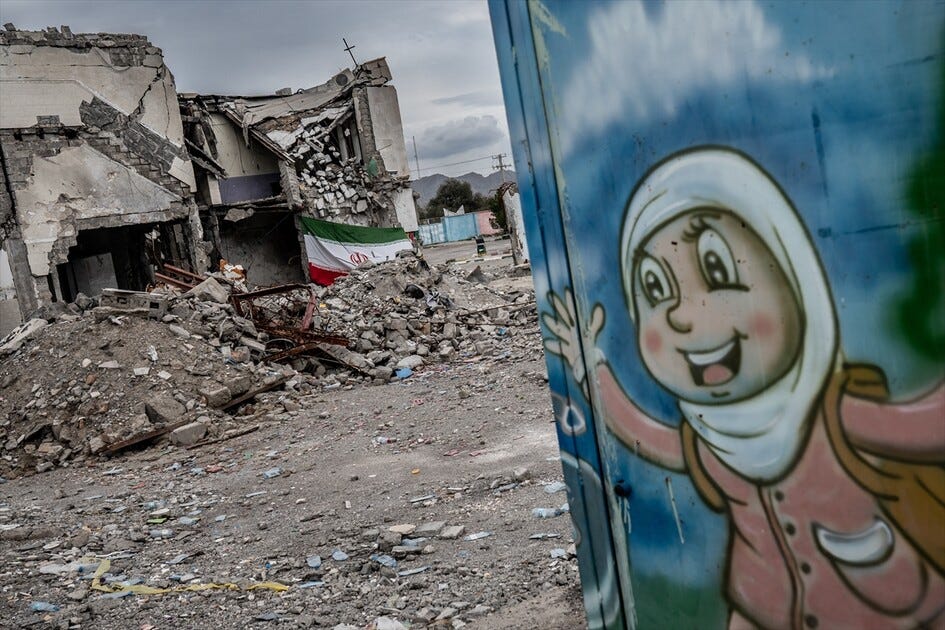
On February 28, 2026, two Tomahawk missiles struck Shajarah Tayyebeh Elementary School and its grounds in the southern Iranian town of Minab, on the opening day of the U.S. and Israeli war against Iran. The blasts killed more than 150 people, with casualty figures across different reports ranging from 150 to as high as 175, and at least 123 of them were children. Only a few children inside the school’s prayer room survived, pulled from beneath the rubble.
The school had been built on land that was part of a military compound, and stood across from a naval base that appears to have been the actual intended target. In terms of child casualties, it’s the deadliest American military targeting error of the 21st century.
According to officials involved in the internal investigation, some Pentagon personnel knew within hours of the strike that the United States was responsible. President Trump, however, initially suggested publicly that Iran was to blame for the attack, a claim made before any formal investigation had concluded and before the Pentagon’s own internal findings, which reportedly pointed toward U.S. responsibility fairly early on, were made public.
It wasn’t until roughly two weeks later that NPR confirmed the Pentagon had formally opened an investigation and that a preliminary assessment had determined a U.S. Tomahawk missile was responsible.
Three Failures Stacked on Top of Each Other
Investigators described the strike not as the result of one catastrophic decision, but as three separate failures compounding each other.
Outdated intelligence. U.S. databases had listed the Minab compound as a military site for years. But commercial satellite imagery told a different story: construction of walls and separate entrances physically cutting the school off from the adjacent military base appears to have been completed by 2017. A 2018 satellite image already showed brightly painted walls, a soccer pitch, assembly rows, and playground markings, unmistakably the signature of a school, not a military facility. Bloomberg separately reported that one analyst had spotted these changes as early as 2019, but logged the finding in a system that wasn’t connected to the primary military intelligence database, meaning the correction never reached the people who needed it.
Gutted civilian harm protections. Under orders from Defense Secretary Pete Hegseth, the Pentagon had dismantled most of its civilian harm mitigation units and cut their staff by roughly 90%, down to fewer than 20 people department-wide. The civilian harm mitigation team at U.S. Central Command specifically, the unit responsible for this exact region, had been reduced from ten people to just one. No civilian harm official reviewed the Minab site before the strike at all.
Overreliance on AI under time pressure. More than 1,000 targets were struck in the first 24 hours of the U.S. air campaign against Iran, following an order for an extensive assault in the final days of February. That pace left personnel with drastically less time to finalize targets than in past conflicts. Work that used to take staff hours, building and vetting proposed target lists, was condensed into minutes with the help of Maven, an AI targeting system built by Palantir. Some CENTCOM personnel reportedly expected Maven to flag the stale or inconsistent intelligence on file for Minab. It didn’t.
Palantir’s Defense, and What It Changed Afterward
Palantir told Bloomberg it “is not responsible for the underlying data nor identifying intelligence deficiencies,” and said there was no evidence its software was actually at fault for the strike itself. Notably, though, following the Minab strike, Palantir added new capabilities to Maven specifically designed to “re-review underlying intelligence to identify factors that would disqualify a target and flag inconsistencies and inaccuracies that human review missed,” an update that, whatever the company’s public position, amounts to fixing exactly the kind of gap investigators say contributed to this strike.
A Pentagon spokesperson said the incident remains under investigation and declined further comment. Officials told Bloomberg the full report has been all but complete for months without being released publicly.
Congress Wants Answers the Admin Hasn’t Given
More than 120 Democratic members of Congress sent a letter to Hegseth demanding detailed information about how the military is limiting civilian casualties in Iran and what role AI is playing in target selection, specifically naming the Minab strike.
Rep. Sara Jacobs (D-Calif.), one of the letter’s signers, didn’t mince words: “We should all feel deeply ashamed by the killing of 175 civilians, mostly little children, who have nothing to do with this awful, reckless war. If the United States is indeed responsible for this attack, then this Administration needs to immediately take responsibility, be held accountable, and make amends to the survivors and loved ones of the victims. Instead, President Trump is denying any U.S. involvement in this strike and blaming Iran without any evidence and before the investigation is even complete.”
The Bottom Line
More than 150 people, at least 123 of them children, died when U.S. missiles hit a school that stale intelligence and a gutted oversight system failed to correctly identify, under a targeting pace so fast that an AI system was leaned on to do work human analysts used to have hours to review carefully. Trump publicly pinned the blame on Iran before the investigation was finished. The Pentagon has sat on a completed internal report for months without releasing it. And the UN says what happened in Minab likely meets the legal definition of a war crime, a finding the State Department has dismissed as bigotry rather than engaged with on the facts.
The blood of these children is on the head of our government, as well as the various unqualified members of the "War Department". Nobody told them to use "AI", especially since the data used by the AI was obsolete and incomplete.
We owe the parents AT LEAST some compensation and an apology. Not the continued war-mongering.