


Donald Trump’s oil and gas stocks are now worth as much as $81.6 million, according to a new report from Democrats on Congress’s Joint Economic Committee. At the end of 2025 they were worth up to about $46 million. His accounts kept buying oil stocks after he launched the war with Iran. Meanwhile, you’re paying more than $4 a gallon.
The Numbers
The committee’s Democrats went through Trump’s own financial disclosures with the Office of Government Ethics. They put his oil and gas holdings at $22.5 million to $81.6 million as of October 19. At the end of 2025, the range was $12.6 million to roughly $46 million.
The oil stocks he already owned going into 2026 rose 43% in value. Disclosures only report ranges, so the exact dollar figure is unknown. The real totals could be higher. Trump hasn’t reported any trades from September or October yet.
He Bought In After the Bombs Fell
Trump launched the war with Iran on February 28. Between March and the end of August, his accounts bought $4.7 million to $17.5 million in oil and gas stocks. They sold $2 million to $5.4 million over the same stretch.
The timing is hard to miss. More than 94% of his oil and gas purchases this year came after the fighting started. The Republican president started a war that sent oil prices soaring, and his portfolio loaded up on oil.
Bragging About Big Oil’s Windfall
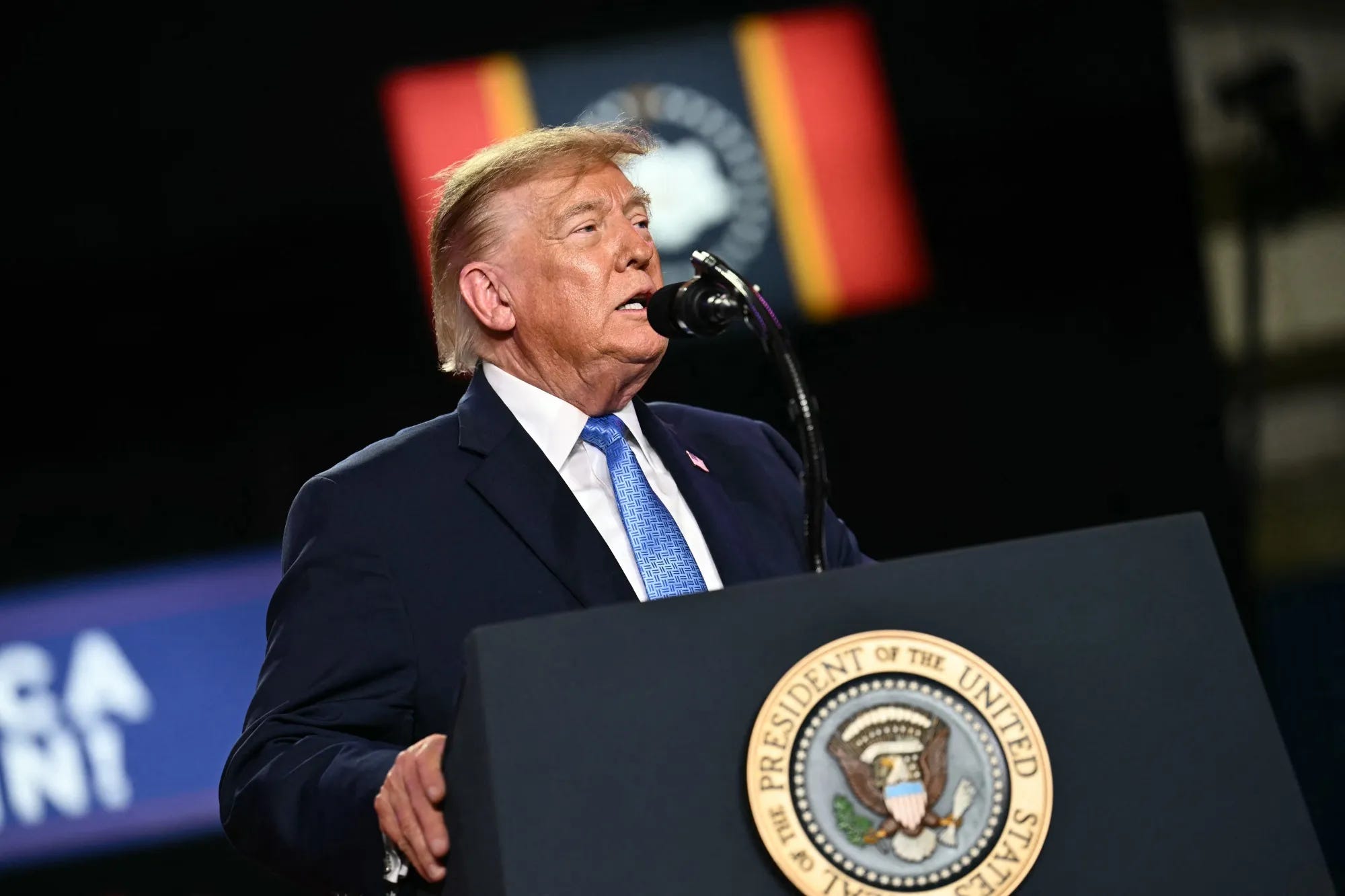
Trump isn’t hiding from it. At a rally in Georgia on Saturday, he boasted that U.S. oil and gas companies are “making hundreds of billions of dollars.” He tied that money directly to what’s happening in the Middle East.
He even told the crowd his advisers had warned him not to talk about how much the industry is making. He said it anyway. A week before the midterms, the Republican in the White House is celebrating oil profits while families pay at the pump.
You’re Paying for It
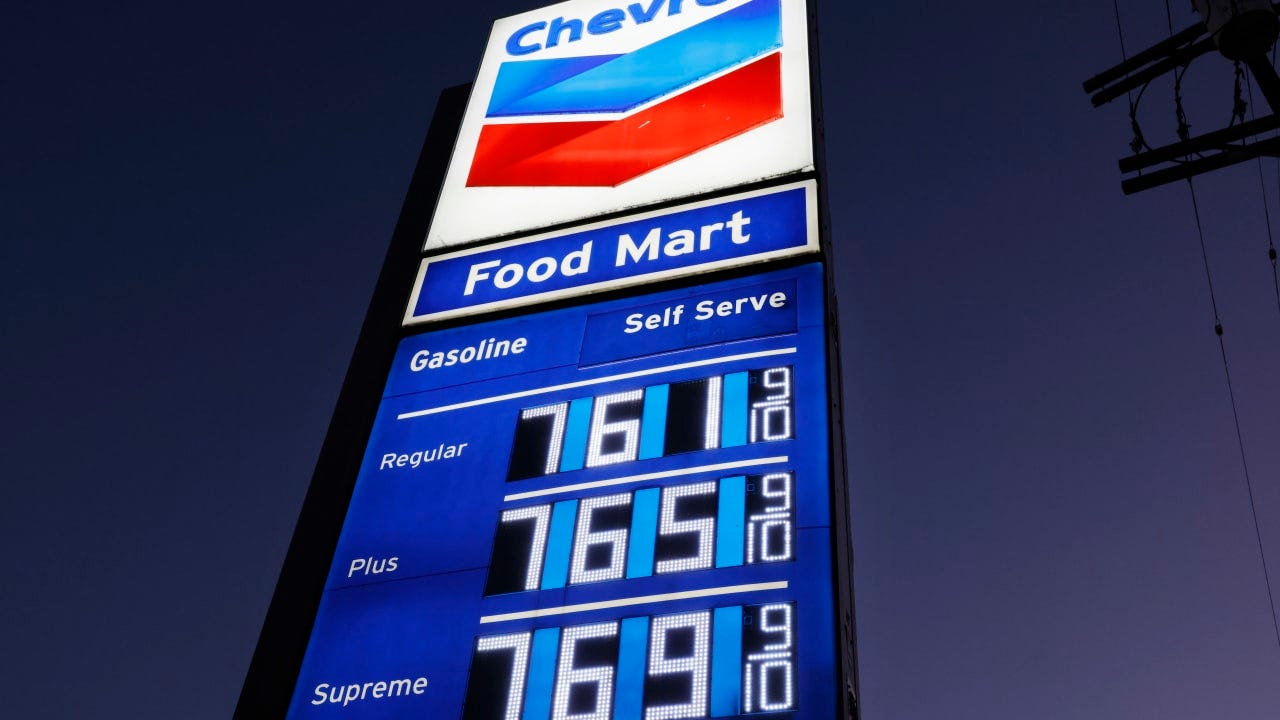
Before the war, a gallon of regular cost $2.87 nationwide. Now it’s about $4.29, and diesel has jumped from $3.68 to $6.28. Brent crude is hovering above $115 a barrel, up from under $75 the day before the war.
The committee estimates Americans have spent an extra $101.4 billion on gas since February 28. That works out to about $856 per family. That’s money out of your pocket, flowing to the same companies in Trump’s portfolio.
Chevron and Exxon at the Top
His two biggest oil positions are Chevron and ExxonMobil. He owns up to $23.1 million in Chevron and up to $18.4 million in Exxon. Since February 20, Chevron shares are up nearly 25% and Exxon nearly 22%.
These are the same companies Trump called out by name in August for making too much money on fuel. He complained about their profits. His accounts kept holding their stock.
The Exxon Sale Before the Ceasefire
One trade stands out. On April 7, the day Trump declared a ceasefire, his accounts sold $500,000 to $1 million in Exxon stock, according to a disclosure he filed in June. Exxon closed at $163.91 that day.
Trump announced the ceasefire that evening. The next morning, Exxon opened down over 6%. There’s no evidence Trump personally directed that sale. But it shows exactly why a president trading stocks in industries his decisions move is a problem.
The White House Says Hands Off
The White House says Trump’s portfolio is run by independent managers using automated index-tracking accounts. Spokesman Davis Ingle said neither Trump nor his family has any say in what gets bought or sold, and that there are no conflicts of interest.
But Trump told CNBC in July that his son Eric handles his finances. Sen. Maggie Hassan, the committee’s top Democrat, said his actions “raise major concerns about conflicts of interest.” Presidents are allowed to own and trade stocks, and insider trading laws still apply.
The Bottom Line
Trump started a war, gas went past $4, and his oil portfolio swelled to as much as $81.6 million. He brags about Big Oil’s windfall on stage while American families pay $856 more at the pump. Every Republican who stands with him in November is standing with that.
Sources: CBS News (Kathryn Watson), reporting on the Joint Economic Committee Democrats’ report; EconoTimes.